
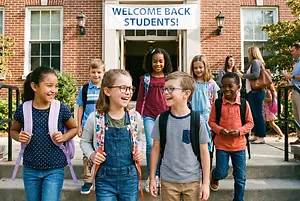
A new backpack, fresh notebooks, and school supplies may be obvious parts of preparing for a new academic year. One item is easier to overlook: making sure your child can comfortably see everything they need to learn.
Children use their vision constantly throughout the school day. They shift between books, tablets, classroom displays, distant boards, sports, and conversations with classmates.
When vision is unclear or uncomfortable, children may compensate instead of telling you something is wrong.
Today’s Vision 380 provides pediatric eye exams for children age five and older, giving Frisco-area families a more complete way to check vision before the school year gets busy.
Children Do Not Always Know Their Vision Is Blurry
Adults usually recognize when a prescription has changed because they know what clear vision should look like.
Children may have no such comparison.
A child who has gradually become nearsighted might simply assume that the board is supposed to look blurry. Another child may compensate for a focusing problem by avoiding reading or taking frequent breaks.
Watch for signs such as squinting, sitting close to the television, moving closer to classroom displays, holding books or devices unusually close, headaches after schoolwork, rubbing the eyes, losing their place while reading, avoiding visually demanding tasks, or complaining of tired eyes.
These behaviors do not always mean there is a vision problem, but they are worth investigating.
A School Screening Is Not a Comprehensive Eye Exam
School vision screenings can be useful, but they are designed to identify certain obvious problems rather than provide a complete assessment of eye health and visual function.
A child may pass a screening while still having a prescription issue, focusing difficulty, eye coordination problem, or another concern.
Today’s Vision 380 provides comprehensive pediatric exams that can evaluate visual acuity, prescription needs, eye health, and other aspects of vision in greater detail.
Myopia Often Appears During the School Years
Myopia, or nearsightedness, causes distant objects to look blurry while nearby objects remain clearer.
This can make it hard for a child to see the classroom board, signs across the room, sports action from a distance, and faces or objects farther away.
Myopia often develops or progresses while children are growing.
Today’s Vision 380 provides dedicated myopia management for children, with care designed to slow progression rather than simply updating stronger prescriptions year after year.
If your child’s glasses prescription seems to change frequently, ask Dr. Cheng whether myopia management should be considered.
Schoolwork Creates Different Vision Demands
A typical school day asks children to switch focus constantly.
They may look down at a worksheet, up at a board, across the classroom, back to a laptop, and then outside for sports or recess.
Clear eyesight is important, but comfortable focusing and eye coordination also matter.
If your child frequently complains of headaches, loses their place while reading, or becomes unusually fatigued during homework, mention these symptoms during the exam.
Digital Devices Can Add to Eye Fatigue
Tablets, laptops, and phones are now regular parts of education.
Long periods of close-up screen use can contribute to temporary eye fatigue, dryness, headaches, and blurred vision.
Encourage children to take regular breaks from near work, look across the room or outside periodically, maintain a comfortable screen distance, use appropriate lighting, blink regularly, and spend time outdoors.
These habits will not correct an unrecognized prescription problem, which is why persistent symptoms deserve an eye exam.
New Glasses Should Work for School and Everyday Life
If your child needs updated glasses, comfort and durability matter just as much as appearance.
Today’s Vision 380 carries a broad range of quality frames and provides personalized optical guidance to help patients choose eyewear that fits properly and suits everyday needs.
Children are more likely to wear glasses consistently when they feel comfortable and confident in them.
Give Your Child One Less Thing to Struggle With
The beginning of a new school year brings enough adjustments without an undetected vision issue making learning harder.
Schedule a back-to-school eye exam at Today’s Vision 380 in Frisco, TX before classes and extracurricular activities fill the calendar.
Dr. Cheng provides attentive, one-on-one care for children and families from Frisco, Prosper, Little Elm, and surrounding communities.
Frequently Asked Questions
Does my child need an eye exam if they passed a school screening?
- A school screening can identify certain vision concerns, but it does not replace a comprehensive eye exam. A full exam assesses vision and eye health in greater detail.
What age does Today’s Vision 380 start seeing children?
- Today’s Vision 380 provides eye care for children starting at age five.
What are common signs that a child needs glasses?
- Squinting, sitting close to screens, difficulty seeing distant objects, headaches, and holding reading material unusually close can all be signs that an eye exam is needed.
What should I do if my child’s myopia keeps getting worse?
- Ask about myopia management. Today’s Vision 380 offers evidence-based care intended to slow the progression of childhood nearsightedness.
When should I schedule a back-to-school eye exam?
- Ideally, schedule before the school year becomes busy so there is enough time to address any prescription changes or eyewear needs. However, an exam is worthwhile at any point if you notice symptoms or changes in your child’s vision.